Artificial Intelligence and the Economy: An Analysis of Global Transformation in the UK–Turkey Axis
Abstract
Artificial intelligence (AI) is projected to contribute between $13–15.7 trillion to the global economy by 2030, with the potential to increase global GDP more than the combined economies of China and India. This transformation is reshaping countries in terms of productivity gains, employment transformation, and competitiveness. While the United Kingdom stands out as one of the leading countries in AI with its strong ecosystem and flexible regulatory approach, Turkey is striving to position itself in global competition by developing national strategies. This study evaluates the economic impacts of AI on a global scale while analysing the AI policies, business approaches, and mutual co-operation opportunities between the UK and Turkey. It aims to provide a roadmap for Turkish businesses and policymakers within a framework of opportunities and risks.
1. Artificial Intelligence and the Global Economy
1.1 Economic Scale and Timeframe
Artificial intelligence is expected to trigger the largest economic transformation in the world by contributing $13–15.7 trillion to the global economy by 2030. The table below summarises AI’s expected contribution to global GDP:
| Source | Expected Contribution by 2030 (Trillion $) | Productivity Gains | New Products/Services |
|---|---|---|---|
| PwC (Sizing the Prize) | 15.7 | 6.6 | 9.1 |
| McKinsey Global Institute | 13.0 | 6.0 | 7.0 |
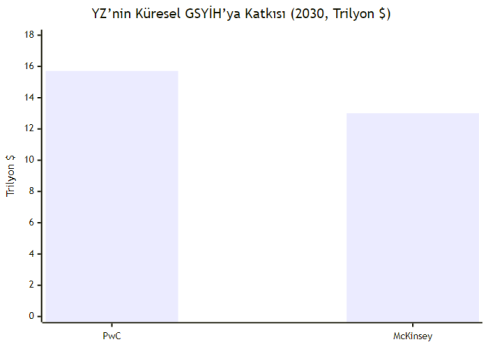
Figure 1: AI’s Contribution to Global GDP (2030)
These figures demonstrate that AI is not merely a technology trend but a structural transformation factor reshaping entire economies. For example, AI’s contribution is estimated at $7 trillion for China, $3.7 trillion for the United States, and $2.7 trillion for Europe (PwC, 2017).
1.2 Sectoral Impacts
The sectors in which AI is expected to generate the highest productivity gains and their projected economic contributions are as follows:
| Sector | AI Applications | Expected Economic Contribution by 2030 (Trillion $) |
|---|---|---|
| Finance | Credit scoring, fraud detection, personalised banking | 3.0 |
| Healthcare | Diagnostic support systems, drug discovery, personalised treatment | 2.5 |
| Manufacturing and Logistics | Predictive maintenance, supply chain optimisation, autonomous systems | 4.0 |
| Retail | Dynamic pricing, customer behaviour analysis, personalised recommendations | 2.0 |
| Public Services | Tax auditing, social assistance management, smart city applications | 1.5 |
Figure 2: Sectoral Economic Contribution of AI (2030)
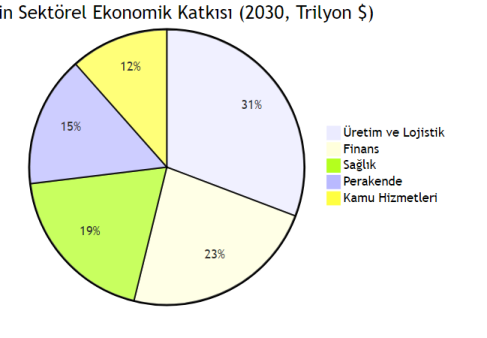
AI’s sectoral impact is highest in manufacturing and logistics (4 trillion $), while it remains relatively lower in public services (1.5 trillion $). However, productivity gains in the public sector are projected to range between 30–50% (McKinsey, 2018).
1.3 Employment and Income Distribution
AI is fundamentally transforming the way work is conducted:
- Routine and repetitive tasks are being automated
- Data-driven decision-making processes are accelerating
- New business models and platform economies are emerging
However, this transformation is also leading to the disappearance of certain professions and shifts in skill demand. According to the World Economic Forum, AI does not eliminate jobs but transforms them. Highly skilled workers and technology-intensive firms benefit the most, while low-skilled workers face greater risks. Therefore, education reforms and social protection policies are of critical importance.
2. The United Kingdom: Between a Strong Ecosystem and Policy Uncertainty
2.1 Artificial Intelligence Ecosystem
The United Kingdom has one of the most dynamic AI ecosystems in Europe. The table below summarises the growth of the UK’s AI ecosystem:
| Indicator | 2022 | 2023 | Annual Growth |
|---|---|---|---|
| Number of AI Companies | 3,100 | 3,600 | +17% |
| AI Revenues | £5.2 billion | £14 billion | +169% |
| AI Employment | 50,000 | 65,000 | +29% |
| AI Investments | £2.5 billion | £4.3 billion | +72% |
Figure 3: Growth of the UK AI Ecosystem (2022–2023)
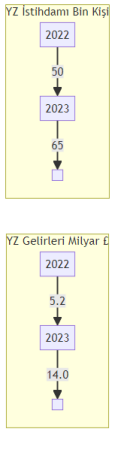
A study supported by Google estimates that AI could contribute £400 billion to the UK economy by 2030. These figures indicate that the UK has positioned AI at the centre of its national economic growth strategy. For example, the AI sector accounted for 12% of the UK’s digital economy in 2023 (GOV.UK, 2023).
2.2 Policy and Regulatory Approach
The UK’s AI policy is shaped by a risk-based and sector-specific approach:
- The National AI Strategy prioritises the safe, transparent and accountable development of AI
- Reports prepared by GO-Science analyse the impact of AI on productivity
- In the context of the EU AI Act, the UK adopts a position that avoids overly strict regulation while balancing safety and rights
2.3 Business Landscape and Opportunities
The sectors where AI investments stand out in the UK include:
- Financial Services: Risk management, fraud detection, personalised banking
- Healthcare: Diagnostic support systems, drug discovery
- Creative Industries: Content production, personalisation
For Turkish companies, the UK represents not only investment and collaboration opportunities but also a benchmark market in terms of regulation and standards.
3. Turkey: Between National Strategy and Global Competition
3.1 National AI Strategy
Turkey has established an institutional framework through the 2021–2025 National Artificial Intelligence Strategy. The six main objectives and progress status are as follows:
| Objective | Status in 2023 | Target for 2025 |
|---|---|---|
| Training AI specialists | 5,000 AI specialists | 50,000 AI specialists |
| Increasing R&D support | 200+ AI projects | 1,000+ AI projects |
| Strengthening public–private collaboration | 10+ joint projects | 50+ joint projects |
| Developing data infrastructure | 3 national data centres | 10 national data centres |
| Supporting the start-up ecosystem | 150+ AI start-ups | 500+ AI start-ups |
| Increasing international co-operation | 5+ agreements | 20+ agreements |
Figure 4: Turkey’s National AI Strategy Targets (2023–2025)
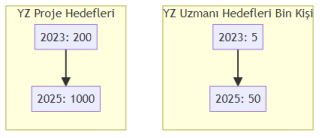
According to OECD data, Turkey’s AI strategy envisions a value-generating, agile and sustainable ecosystem. Additionally, Turkey is pursuing a balancing strategy within US–China competition while aiming for strategic autonomy. For example, AI-related R&D expenditure exceeded $1.2 billion in 2023 (TÜBİTAK, 2024).
3.2 Economic Impacts and Sectors
The sectors where AI is prominent in Turkey include:
- Finance and Banking: Credit scoring, fraud detection
- Manufacturing and Industry: Predictive maintenance, productivity optimisation
- Logistics and Transportation: Route optimisation, autonomous systems
- Public Services: E-government applications, tax auditing
However, Turkey lacks comprehensive AI sector data comparable to the UK, indicating that the ecosystem is still developing.
3.3 Challenges and Opportunities
Challenges:
- Shortage of qualified human capital and brain drain
- Issues related to data quality and governance
- Limitations in R&D and investment financing
Opportunities:
- A young and digitally adaptable population
- A strong entrepreneurial ecosystem
- Advanced public digital infrastructure
4. Co-operation Opportunities Between the UK and Turkey
The UK and Turkey, although at different stages, offer significant opportunities for collaboration:
4.1 Joint R&D and Start-up Ecosystem
The UK, particularly the London–Cambridge–Oxford corridor, is a global hub for AI start-ups. Turkish companies can benefit from accelerator programmes, investment funds, and university partnerships.
4.2 Sectoral Applications and Know-How Transfer
In sectors such as finance, healthcare, defence, and energy, the UK’s experience provides direct opportunities for collaboration and licensing.
4.3 Regulation and Standards
The UK’s flexible and experimental regulatory approach can serve as a key reference for Turkish stakeholders.
4.4 International Trade and Value Chains
AI can enhance efficiency in trade digitalisation, customs, logistics optimisation, and supply chain management, strengthening trade relations between the UK and Turkey.
5. Recommendations for Business and Policymakers
5.1 Treat AI as a Strategic Transformation
Companies should approach AI as a holistic transformation programme, not merely a software investment.
5.2 Invest in Human Capital
AI transforms jobs rather than eliminating them. Therefore, AI literacy and continuous learning should be prioritised.
5.3 Establish Data Governance
Data quality, security and privacy must be institutionalised as core organisational functions.
5.4 Strengthen Public–Private Collaboration
A transparent and predictable regulatory framework is essential for a healthy AI ecosystem.
5.5 Address Risks and Ethical Issues
Employment, inequality and ethics will determine AI’s social acceptance. Organisations must adopt responsible AI governance models.
Conclusion
Artificial intelligence will contribute tens of trillions of dollars to the global economy by 2030, transforming both countries and businesses. While the UK leads with its strong ecosystem and flexible regulation, Turkey is building its position through national strategies. For Turkish businesses, AI is not merely a trend but a strategic determinant of long-term competitiveness. This study provides a roadmap by analysing AI–economy dynamics within the UK–Turkey axis.
References
- PwC. (2017). Sizing the Prize: What’s the Real Value of AI for Your Business?
- PwC. (2018). The Macroeconomic Impact of Artificial Intelligence.
- GOV.UK. (2023). Artificial Intelligence Sector Study 2023.
- Google UK. (2023). UK Economic Impact Report: AI Edition.
- OECD.AI. (2024). National AI Strategy – Turkey.
- RUSI. (2024). Turkey’s Strategic Balancing Efforts Amid the US–China AI Confrontation.
- McKinsey Global Institute. (2018). Notes from the AI Frontier: Modelling the Impact of AI on the World Economy.
- TÜBİTAK. (2024). Turkey’s AI R&D Expenditure Report.
- World Economic Forum. (2023). The Future of Jobs Report 2023.
- Accenture. (2022). How AI Can Boost Productivity and Growth in Europe.

Zafer Calis
Zafer Çalış is an entrepreneurial professional with expertise in software development and electronic systems. He designs innovative technological solutions that combine technical skill with strategic insight, driving efficiency and real-world impact across digital and electronics sectors.
- Zafer Calis